The Quiet Rhythm of Kyoto's Northern Stone Gardens
By Julian Morland • Published May 2025 • 8 Min Read
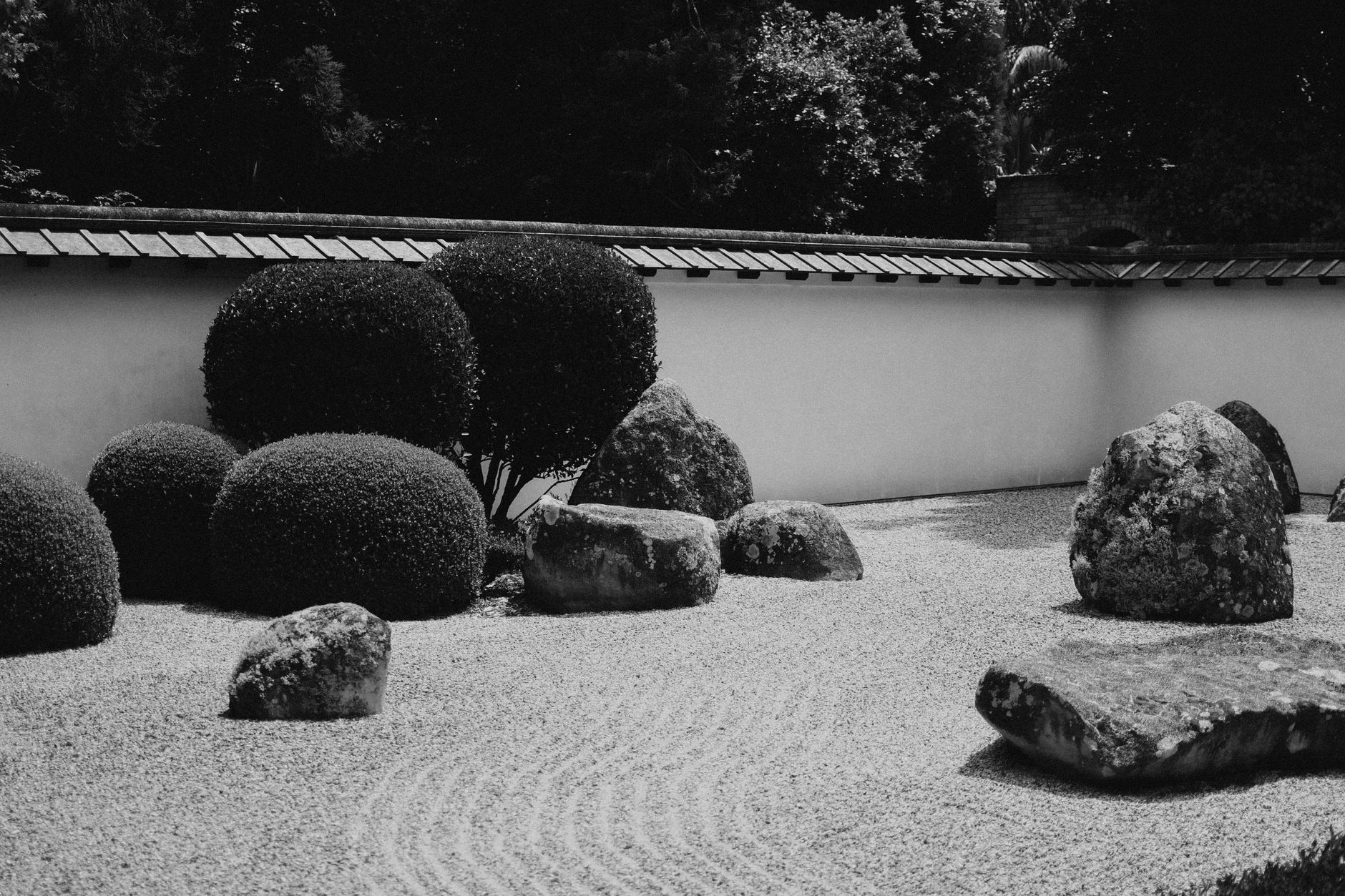
In the quiet districts flanking the foothills of Mount Hiei, the tourist buses rarely venture. Here, sheltered beneath towering cedar branches, one encounters Kyoto not as a crowded museum of past imperial splendor, but as an ongoing meditation on emptiness, known locally as ma.
To step across the worn cedar threshold of a northern sub-temple is to witness an orchestration of space where absence is as vital as form. Raked granite sand simulates flowing mountain streams; moss-veiled basalt rocks represent sacred isles suspended in time. Nothing screams for attention. The eye is invited to rest, to decelerate, and to decipher nuances in grey stone.
The Geometry of Stillness
Constructed during the Muromachi epoch, these dry-landscape sanctuaries (karesansui) were never meant for strolling. Rather, they function as two-dimensional paintings brought into three dimensions, viewed solely from the shaded verandas of cedar pavilion corridors. The masters who arranged these stones understood that human consciousness is easily overwhelmed by superfluous detail.
"The garden is not an imitation of nature; it is a question addressed directly to the viewer's capacity for stillness."
Sitting on tatami matting while morning rain drips from ceramic eaves, the traveler learns that movement is not always progress. In an age dominated by instantaneous itineraries and frantic check-ins, remaining seated before fifteen carefully arranged boulders for an entire morning is an act of quiet rebellion.
Guidelines for the Mindful Visitor
- Arrive at temple openings (typically 08:30 AM) when morning sunlight slants horizontally through cedar canopies.
- Silence digital devices and avoid rapid-fire photography; absorb the arrangement with the unaided eye first.
- Support local artisans maintaining the surrounding bamboo fences and cedar roofing shingles.